Cookie Policy: This site uses cookies to store information on your computer. Read more

EPCs in Scotland: A Practical Guide for Landlords
Albany Lettings in Edinburgh
13th April 2026
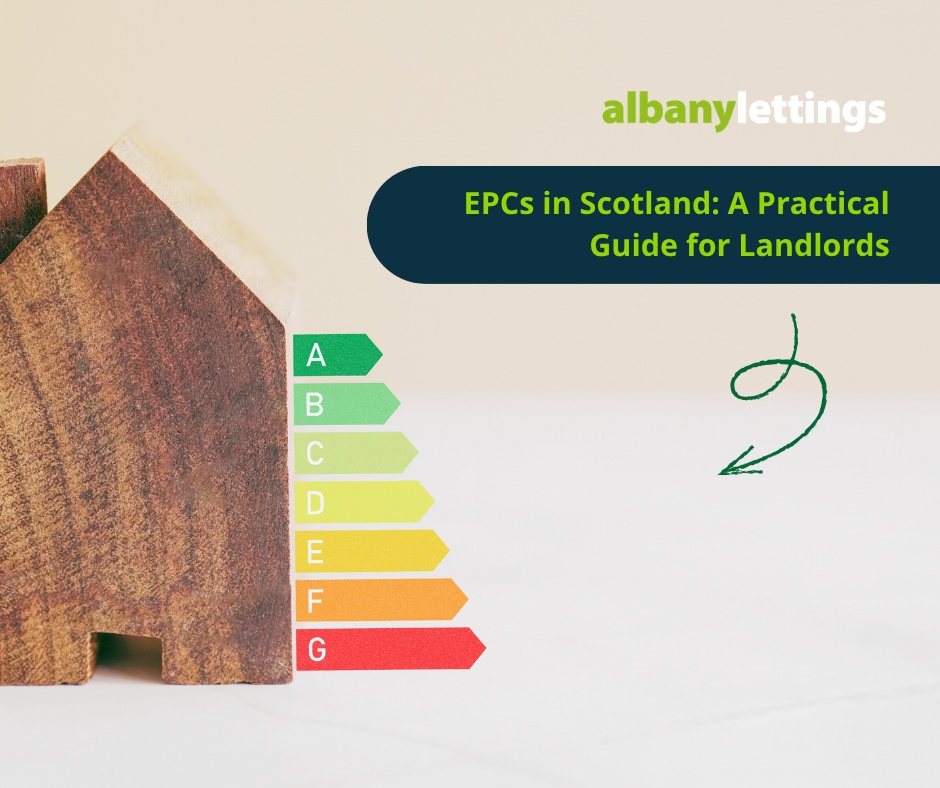
EPCs in Scotland: A Practical Guide for Landlords
Most landlords think about their EPC at the exact moment they need one. Usually when a new tenancy is about to be marketed, occasionally when an old certificate has expired.
It's understandable - EPCs don't tend to feel urgent until they are. But that's changing. The reform landscape in Scotland means EPCs are becoming significantly more important to how properties are let, valued and managed over the coming years. And there are deadlines on the horizon that are worth understanding now, before they creep up.
This guide aims to help you understand what the rules actually are, what's genuinely changing, and how to think about it without either panicking or ignoring it.
What an EPC Actually Measures
An Energy Performance Certificate rates how energy efficient a property is, on a scale from A to G - A being the most efficient, G the least.
The current rating is based on the estimated cost of heating and powering a property under standard assumptions. Crucially, it's not purely about the building itself. The type of heating system and the cost of fuel both play a role - which is why two almost identical properties can end up with different ratings depending on how they're heated.
Each certificate also includes a list of recommended improvements, with an indication of likely cost and potential impact on the rating. These recommendations vary in quality - more on that below.
When Do You Actually Need One?
In Scotland, a valid EPC is required when marketing a property to new tenants. That's the trigger - the point of marketing, not the point of letting.
Under the current system, a certificate is valid for up to 10 years. You can use an existing EPC even if it was issued for a previous owner, as long as it's still within that window. If a property is already tenanted and you're not re-marketing it, an older certificate won't cause a compliance issue in the short term.
Your practical obligations as a landlord are:
- Include the EPC rating in all property adverts
- Make the certificate available to prospective tenants
- Provide a copy to new tenants at the start of the tenancy
- Display the certificate within the property
These aren't optional. Failure to comply can result in fines, and this is one of those areas where the basics genuinely matter.
Is There a Minimum Standard Right Now?
No - and this surprises some landlords.
Unlike England, Scotland currently has no minimum energy efficiency standard for private rented properties. A property rated F or G can legally be let. That position is changing, but it hasn't changed yet.
What's Actually Changing - and When
This is where it gets more involved, and where the original guidance landlords may have seen has already moved.
The Scottish Government planned to introduce new-style EPCs from October 2026. That date has now been pushed back. EPC reform has been delayed until the second half of 2027, with the current EPC system under the 2008 regulations remaining in place until further notice while Scotland aligns its timeline with the UK Government's revised schedule.
So the immediate practical position is unchanged - your existing EPC remains valid, the current system still applies.
But the direction of travel is clear, and the changes coming are significant:
- New-style EPCs will introduce a Heat Retention Rating alongside the existing cost-based score. Rather than asking "how expensive is this to run?", the new rating will focus on "how well does this property hold heat?" - looking more closely at insulation, glazing, draught proofing and overall building fabric. A property with cheap fuel and poor insulation could score well today but poorly under the new system.
- Shorter validity periods. The validity period for EPCs will reduce from 10 years to 5 years under the new system. If you're relying on a certificate that's a few years old, factor in that it may need renewing sooner than you'd planned.
- Minimum standards are coming. This is the part that matters most for landlords planning ahead. From 1 April 2028, all new tenancies in Scotland will need to meet a minimum EPC equivalent of C. By 31 December 2033, that requirement will extend to all private rented properties. That's a hard deadline, not a consultation - and with the new Heat Retention Rating forming the basis of future standards, properties that look compliant today may need to be reassessed.
Should You Be Making Improvements Now?
This is where balance matters - and where a lot of landlords either rush unnecessarily or put their heads in the sand.
The delay gives more time, but it also creates a specific risk: if you upgrade your property to achieve a C rating under the current rules, there's no guarantee it will hit the same grade when the assessment methodology changes. That's not a reason to do nothing - it's a reason to be deliberate about what you do.
The sensible approach for most landlords right now is:
- If your property is already EPC C or above - you're likely in a strong position. Hold tight, get a new assessment once the new system launches, and don't spend money speculatively in the meantime.
- If your property is below EPC C - focus on fabric improvements rather than heating system changes. Insulation, draught proofing and glazing are likely to count under both the current and new system. These are lower-risk investments.
- Don't rely solely on EPC recommendations. Assessments are based on visible evidence and standard assumptions - details can be missed and recommendations aren't always optimal. Get independent advice before committing to significant spend.
The improvements that tend to make the most meaningful difference, regardless of which system applies, are:
- Loft and wall insulation
- Draught proofing
- Heating controls - thermostats, programmers, smart controls
- Glazing improvements where appropriate
- Hot water cylinder insulation
Smaller, lower-cost changes can also contribute and are worth doing as part of normal maintenance rather than treating them as a separate compliance project.
A Practical Summary
EPCs are moving from a compliance footnote to a genuine factor in how Scottish rental properties are let and valued. The timelines have shifted, but the direction hasn't.
For most landlords, a sensible approach looks like this:
- Make sure your current EPC is valid and accurately reflects the property
- Ensure your marketing process ticks the compliance boxes
- Understand where your property sits on the energy efficiency scale
- Plan fabric improvements alongside natural maintenance cycles rather than rushing
- Keep a close eye on the 2028 deadline for new tenancies - it's closer than it feels
If you're unsure where your properties stand or want to think through what the upcoming changes mean for your portfolio specifically, we're happy to talk it through.
Get in touch.